Oil Boiler Service Torrington CT
Northwest Connecticut runs on oil. Roughly 38% of Connecticut homes heat with fuel oil statewide — and in the Torrington area the share is higher, because many streets here never got a gas main. If your home is oil-heated, your boiler needs a specialist who knows oil burners. That specialist is Ember Heat.
Northwest Connecticut runs on oil. Roughly 38% of Connecticut homes heat with fuel oil statewide — and in the Torrington area the share is higher, because many streets here never got a gas main. If your home is oil-heated, your boiler needs a specialist who knows oil burners. That specialist is Ember Heat.
Oil boiler acting up? Call (860) 650-9760
Oil heat has a reputation problem it doesn't deserve. People picture the sooty burners of the 1970s — but a modern oil burner, properly set up and serviced annually, is reliable and efficient. The catch is that word "properly": oil burners are precision equipment, and they punish neglect. That's where we come in.
Why Oil Dominates Northwest Connecticut
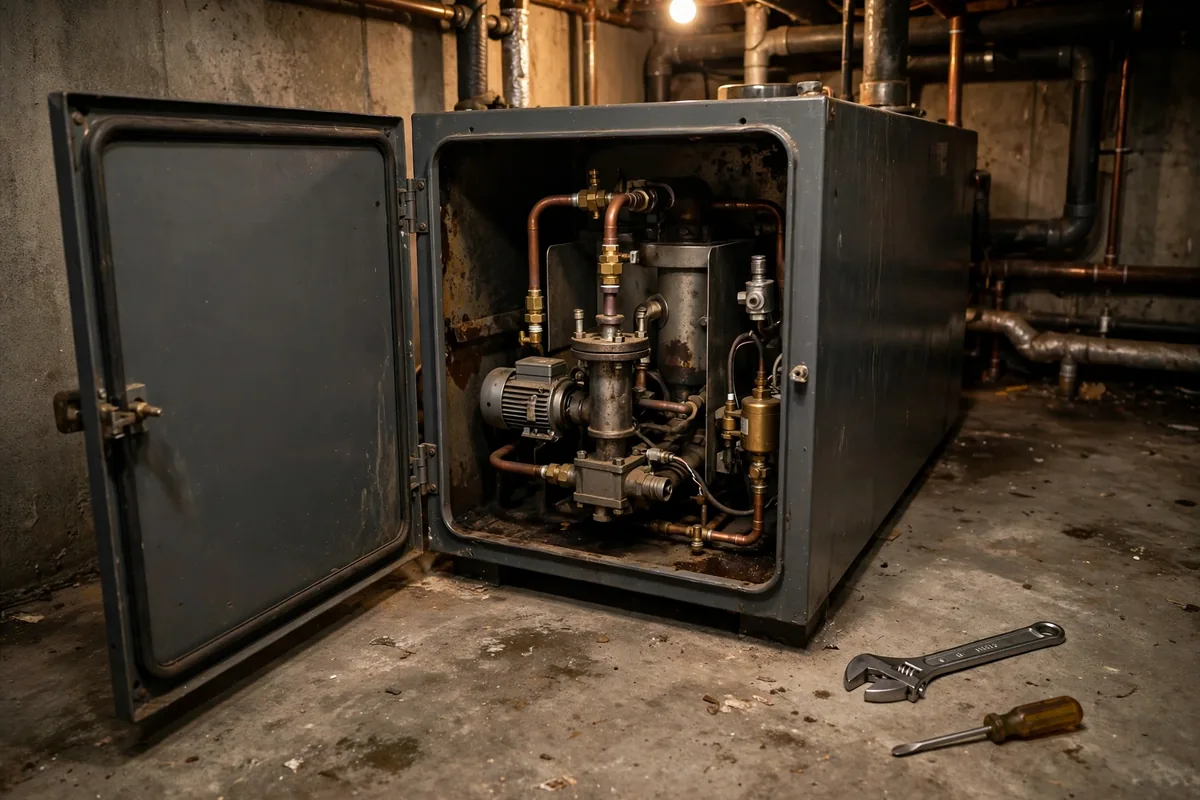
The reason is infrastructure, not preference. Natural gas reaches homes through underground mains, and large parts of Torrington and surrounding Litchfield County towns simply don't have them. Extending a gas main down a street is a utility decision, not a homeowner decision — and for many streets, it never happened.
So generations of homes here were built around oil: a tank in the basement or buried outside, a fuel line to the burner, and a boiler that's been heating the house for decades. When that boiler needs service or replacement, "just switch to gas" often isn't an option. For most oil-heated homes here, the right move is a well-maintained, properly tuned oil system. We make sure that's what you have.
The Oil Burner: What We Service
An oil burner is a small machine with exact tolerances, and every part matters:
Nozzle. This tiny brass fitting atomizes the oil into a fine mist for clean combustion. It wears with every hour of firing — annual replacement is standard practice. Skipping it is the most common cause of declining efficiency.
Electrodes and ignition. The electrodes arc to ignite the oil mist; the transformer powers them. Worn electrodes or a weak transformer means delayed ignition or no ignition — the classic "burner tries, fails, locks out" no-heat call.
Fuel pump and oil filter. The pump delivers oil at precise pressure; the filter protects the nozzle from sludge and debris. A clogged filter starves the burner — one of the most common and most preventable no-heat causes we see.
Primary control and cad cell. The primary control is the burner's brain; the cad cell confirms flame. When the cad cell gets dirty or the control fails, the burner locks out for safety.
Combustion tuning. After service, we test combustion with proper instruments and adjust air, fuel pressure, and draft to hit clean, efficient burn. This is the difference between a burner that "runs" and a burner that runs right — and it's where fuel savings come from.
Smells, soot, or lockouts? Call (860) 650-9760
Tanks and Fuel Lines: The Parts Nobody Checks
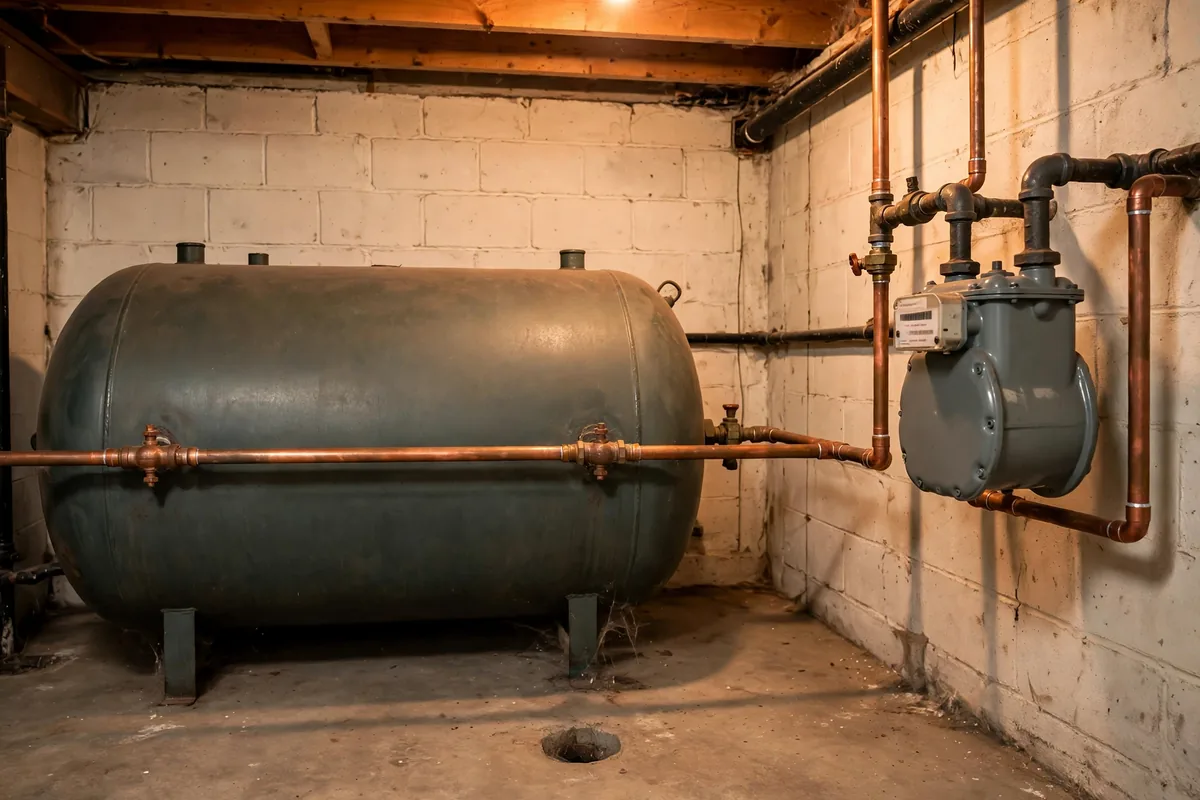
The burner gets the attention, but the tank and line cause their share of trouble. Above-ground basement tanks corrode from the bottom up — condensation forms inside every tank, water sinks, and steel rusts. We inspect tanks for weeping seams, heavy corrosion, and failing valves. A tank that lets go puts hundreds of gallons of oil in your basement; catching it early is everything.
Buried tanks are a bigger concern: older underground tanks eventually corrode through, and a leaking underground tank is an environmental problem with serious cleanup implications. If you have an old buried tank, talk to us — this is one area where proactive beats reactive by a mile.
Fuel lines matter too: kinked, corroded, or improperly routed lines starve the burner or leak. On every oil service, we check the line's condition and connections.
Common Oil Boiler Problems We Fix
Burner lockout / no heat. The red reset button tripped. Causes range from an empty tank to a clogged nozzle to a failed transformer. Press reset once — if it trips again, stop and call us. Repeated resets can pool unburned oil and cause a dangerous puffback.
Soot and smells. A properly tuned oil burner produces virtually no soot and no oil smell. Soot, puffback stains, or persistent odor means combustion is off — worn nozzle, wrong air-fuel mix, or draft problems. This needs professional correction.
Short cycling. Burner fires, runs briefly, shuts down, repeats. Causes include a clogged nozzle, overheating from poor water circulation, or control issues. It wastes fuel and wears the burner.
Rising fuel consumption. Using noticeably more oil than last winter with similar weather? The burner is likely out of tune. A proper service usually restores efficiency.
Tank issues. Slow leaks, weeping fittings, gauge problems, or a tank you're simply not sure about anymore. We'll inspect and give you a straight assessment.
Oil heat trouble? Call (860) 650-9760
Oil vs. Gas: An Honest Word
Homeowners with gas available sometimes ask whether they should convert. Here's our honest take: gas means no tank, no delivery scheduling, and no filter changes. But conversion costs are real — gas line work, venting changes, and the boiler itself. And oil has advantages people forget: you buy fuel when prices favor you, and modern oil burners are highly efficient.
If your street has no gas main — common across Torrington — the question is moot, and the answer is to run your oil system properly. Either way, we'll give you the real comparison for your house.
Frequently Asked Questions
How often does an oil burner need servicing?
Every year, without exception. The nozzle, filter, and combustion settings all degrade with use. Annual service is the manufacturer's expectation and the industry standard — it's what keeps oil heat reliable and efficient.
Why does my oil burner keep locking out?
The burner locks out when it fails to establish or maintain flame safely. Common causes: empty or low tank, clogged nozzle or filter, failed ignition transformer, dirty cad cell, or fuel pump problems. It needs hands-on diagnosis — the lockout is a symptom, not the disease.
Is it safe to keep pressing the reset button?
Press it once. If the burner fires and runs normally, schedule a service soon — something caused the trip. If it locks out again, do not keep resetting. Each reset sprays more unburned oil into the chamber, and the eventual ignition can cause a dangerous puffback. Call (860) 650-9760 instead.
My basement smells like oil. Is that normal?
A faint odor right after a delivery can happen. A persistent oil smell means something's wrong — a leak, a weeping fitting, or poor combustion. Don't ignore it.
Should I replace my old oil tank?
If it's weeping, heavily corroded, on unstable supports, or an aging buried tank — yes, proactively. A failed tank is one of the most expensive messes a homeowner can face.
Can you convert my oil boiler to gas?
If gas is available on your street, conversion is possible — gas line installation, burner or boiler changes, and venting work. We'll assess your situation and price the full job.
Oil Heat Done Right
Oil heats a huge share of Torrington homes, and it heats them well — when the burner is clean, the combustion is tuned, and the tank is sound. That's the system we deliver, every visit.
Call Ember Heat: (860) 650-9760 215 E Main St, Torrington, CT 06790
No heat? Call Ember Heat.
Boiler repair, installation, and maintenance across Torrington, Connecticut — diagnosed properly, explained plainly, fixed right.