Boiler Repair Torrington CT
No heat. Water on the basement floor. A boiler banging like a drum at 2 a.m. These are the calls we answer every heating season — and boiler repair in Torrington CT is what Ember Heat is built for. We diagnose hydronic systems properly, explain what failed in plain English, and fix it without selling you parts you don't need.
No heat. Water on the basement floor. A boiler banging like a drum at 2 a.m. These are the calls we answer every heating season — and boiler repair in Torrington CT is what Ember Heat is built for. We diagnose hydronic systems properly, explain what failed in plain English, and fix it without selling you parts you don't need.
No heat or something wrong? Call (860) 650-9760
A boiler is not a furnace. It heats water and moves it through radiators, baseboard, or radiant floors — no ducts, no blower. A generalist who mostly works on furnaces can misdiagnose hydronic problems fast. We work on boilers every day, so we usually know what's wrong before the tools come out.
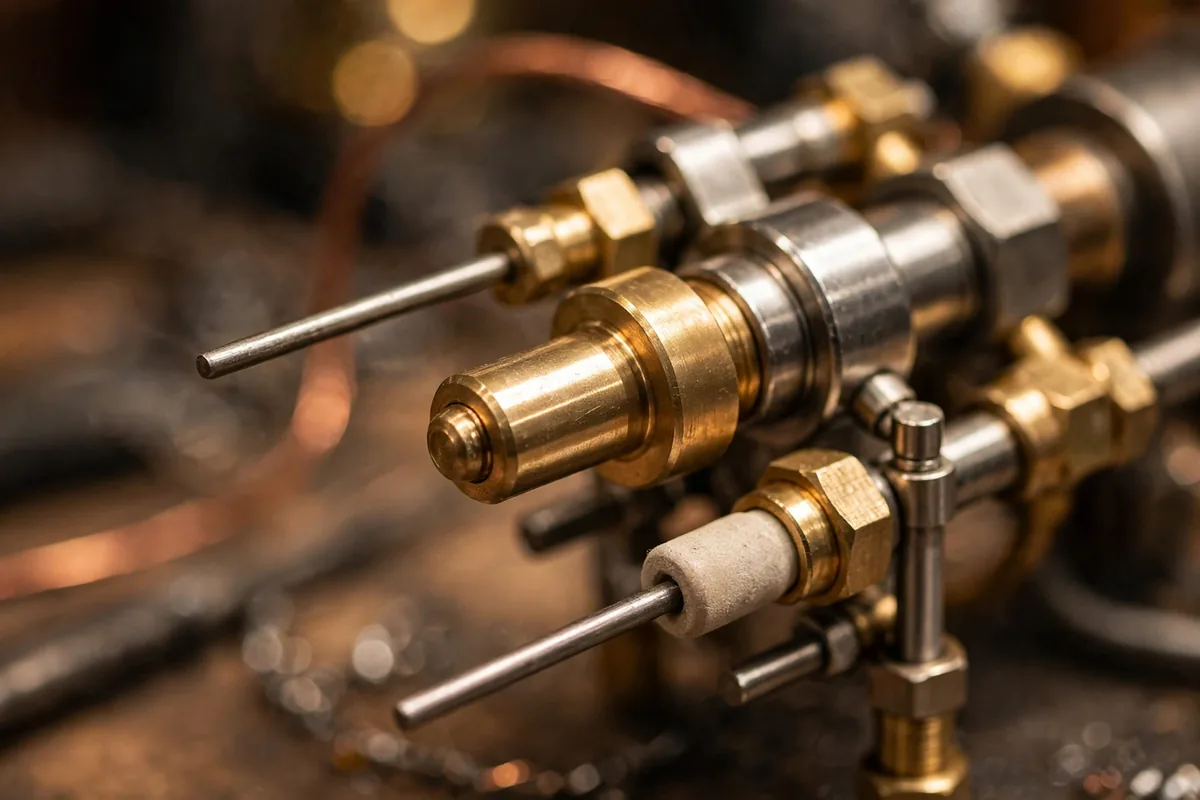
The No-Heat Call
The most common call we get: the thermostat is set to 70, the house is 58, and the boiler isn't doing its job. No-heat causes range from the simple to the serious, and a proper diagnosis starts with ruling things out in order.
On oil systems, the usual suspects are a tripped burner reset, an empty oil tank, a clogged nozzle or filter, or a failed ignition transformer. On gas systems, it's often the igniter, flame sensor, or gas valve. On any system, it can be the circulator pump, a stuck zone valve, or a failed aquastat.
Before you call, check three things: the thermostat setting, the emergency shutoff switch (usually a red switch plate near the boiler — make sure it's ON), and your oil level if you heat with oil. If the burner's red reset button has tripped, press it exactly once. If it trips again, stop — repeated resets can flood the combustion chamber with unburned oil, which is dangerous. Call us instead.
Boiler down? Call (860) 650-9760
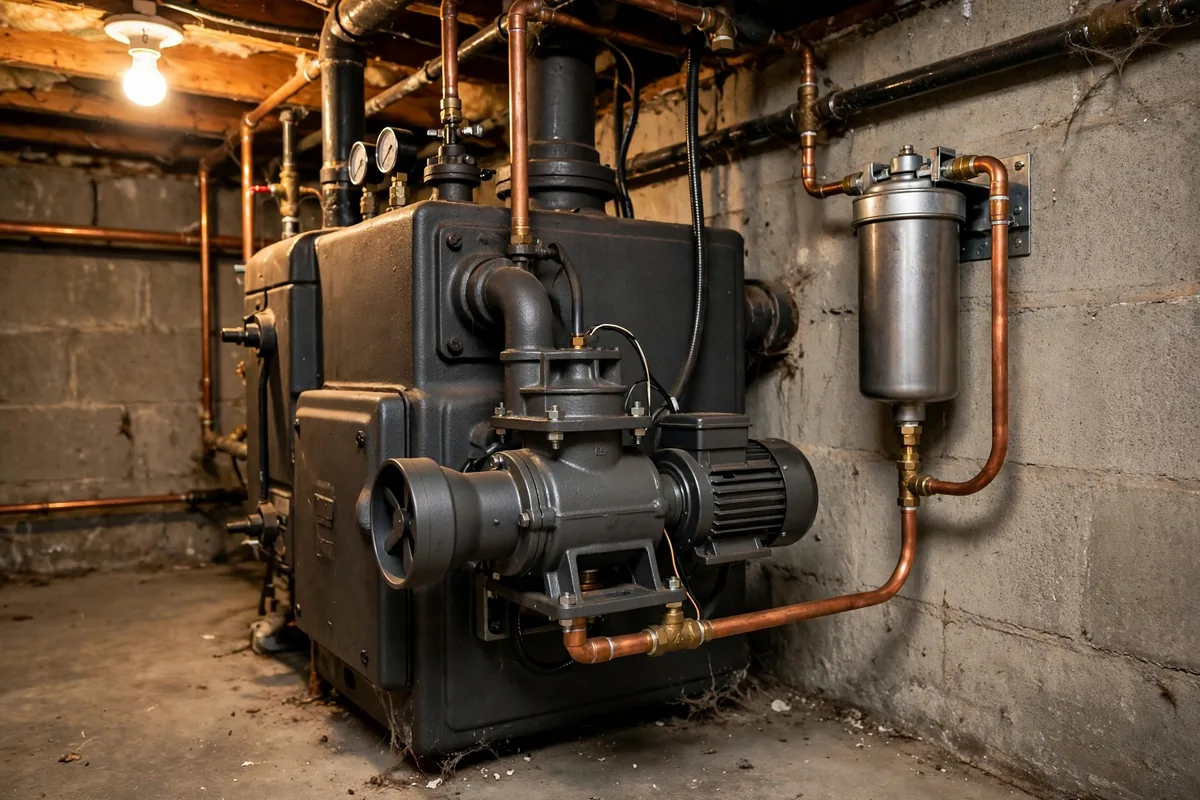
Leaks: Water Where It Shouldn't Be
Water around a boiler always deserves attention, but not every puddle means the boiler itself is leaking. We see three common sources. First, the pressure relief valve discharging — usually a symptom of high pressure, not the root problem. Second, a failed seal or gasket on a pump, valve, or fitting — fixable. Third, a cracked heat exchanger or boiler section — the serious one, and often the end of the line for an older unit.
We'll trace the water to its source before recommending anything. A ten-dollar gasket and a cracked section look identical from across the basement — but the fix and the cost are worlds apart, which is why diagnosis comes first.
If the leak is active and spreading, shut the boiler's water feed valve if you can reach it safely, and call (860) 650-9760.
Kettling, Banging, and Gurgling
A boiler that sounds like a percolator or a drum is telling you something. Kettling — that rumbling, boiling-water noise — happens when mineral scale builds up on the heat exchanger. Water trapped behind the scale overheats and flashes to steam, hammering the metal. It's common in older systems and areas with hard water, and it stresses the heat exchanger every time it happens.
Banging in steam systems usually means water hammer: condensate pooling where it shouldn't and getting slammed by incoming steam. Gurgling is usually trapped air. Each noise points at a different fix — we'll identify it and fix the cause, not just the symptom.
Pressure Problems
Your boiler's pressure gauge tells a story. On a cold system, it should read roughly 12–15 psi. Pressure that keeps dropping to zero usually means a leak somewhere — sometimes visible, sometimes hidden in a wall or under a slab. Pressure that climbs too high and pops the relief valve usually means a failed expansion tank: the tank's job is to absorb water's expansion as it heats, and when the tank waterlogs or its bladder fails, pressure has nowhere to go.
We test expansion tanks, check the pressure-reducing (fill) valve, and inspect relief valves as part of any pressure diagnosis. These are affordable fixes that prevent the bigger failures — a relief valve that keeps discharging will eventually fail, and overpressure stresses every gasket and seal in the system.
Pressure gauge acting up? Call (860) 650-9760
Zone Problems: Half the House Is Cold
In a zoned hydronic system, one cold zone while the others heat fine usually means a stuck zone valve, a failed zone circulator, or air locked in that loop. Thermostat wiring and control issues can also leave a zone dead. The boiler itself is often fine — which is good news, because zone components are far cheaper than a boiler.
We test each zone independently: valves opening and closing, circulators moving water, thermostats calling correctly. If your whole house heats unevenly rather than one zone being dead, the issue may be balancing, air in the system, or a boiler that's undersized or limping — and we'll tell you which.
What a Repair Visit Looks Like
We start by listening — what the boiler is doing, when it started, what changed. Then we inspect: burner operation, pressure and temperature readings, circulators, zone valves, expansion tank, and relief valve. Only then do we recommend repairs, with the price explained before any work begins.
If a repair doesn't make sense — a cracked section on a 30-year-old boiler, a heat exchanger that's been kettling for years — we'll say so and talk replacement honestly. We'd rather lose a repair job than sell you one that fails by February.
Get your heat fixed right: (860) 650-9760
Frequently Asked Questions
How much does boiler repair cost?
It depends entirely on what's wrong — a zone valve and a heat exchanger are different universes. We diagnose first and give you the price before starting work. We don't publish pricing because every boiler and every failure is different.
My boiler is leaking water. Is it dangerous?
Water is usually a property risk rather than a safety risk — but don't ignore it. If you smell gas, leave and call the gas company. A leaking relief valve can signal dangerous overpressure — worth a prompt call.
Why does my boiler keep shutting off?
Short cycling has several causes: a dirty flame sensor, poor water flow, a faulty aquastat, or a clogged oil nozzle starving the burner. It needs hands-on diagnosis — the same symptom has half a dozen causes.
Can you repair my steam boiler?
Yes — steam is a specialty of ours: pressuretrols, sight glasses, Hartford loops, and water chemistry. Many companies won't touch steam; we do it regularly.
My radiators are cold at the top. What's wrong?
Usually trapped air — bleeding them often fixes it (see our guide). On steam radiators, a cold radiator is often a failed air vent. All fixable.
Should I keep resetting my oil burner when it trips?
Press the reset button once. If it trips again, stop — repeated resets can pool unburned oil in the chamber and cause a dangerous puffback on ignition. Call (860) 650-9760.
Don't Wait Out a Boiler Problem
Boiler issues don't fix themselves — they get more expensive. A dripping relief valve becomes a failed valve. Kettling becomes a cracked section. If something's off with your heat, get it looked at now, while it's still a repair.
Call Ember Heat: (860) 650-9760 215 E Main St, Torrington, CT 06790
No heat? Call Ember Heat.
Boiler repair, installation, and maintenance across Torrington, Connecticut — diagnosed properly, explained plainly, fixed right.