Boiler Installation Torrington CT
When a boiler is done — cracked section, rotted heat exchanger, or repair bills stacking up year after year — replacing it is the smartest money you'll spend on your house. Ember Heat handles boiler installation in Torrington CT from first assessment to final inspection: properly sized, correctly piped, and matched to your fuel, your house, and your budget.
When a boiler is done — cracked section, rotted heat exchanger, or repair bills stacking up year after year — replacing it is the smartest money you'll spend on your house. Ember Heat handles boiler installation in Torrington CT from first assessment to final inspection: properly sized, correctly piped, and matched to your fuel, your house, and your budget.
Thinking about a new boiler? Call (860) 650-9760
A boiler replacement is a 20-plus-year decision. The unit going in today will heat your home through two decades of Litchfield County winters — January nights in the teens, nor'easters, the works. Getting the sizing, the fuel choice, and the installation right matters far more than getting it done fast. We take the time to do it properly.
Signs Your Boiler Needs Replacing
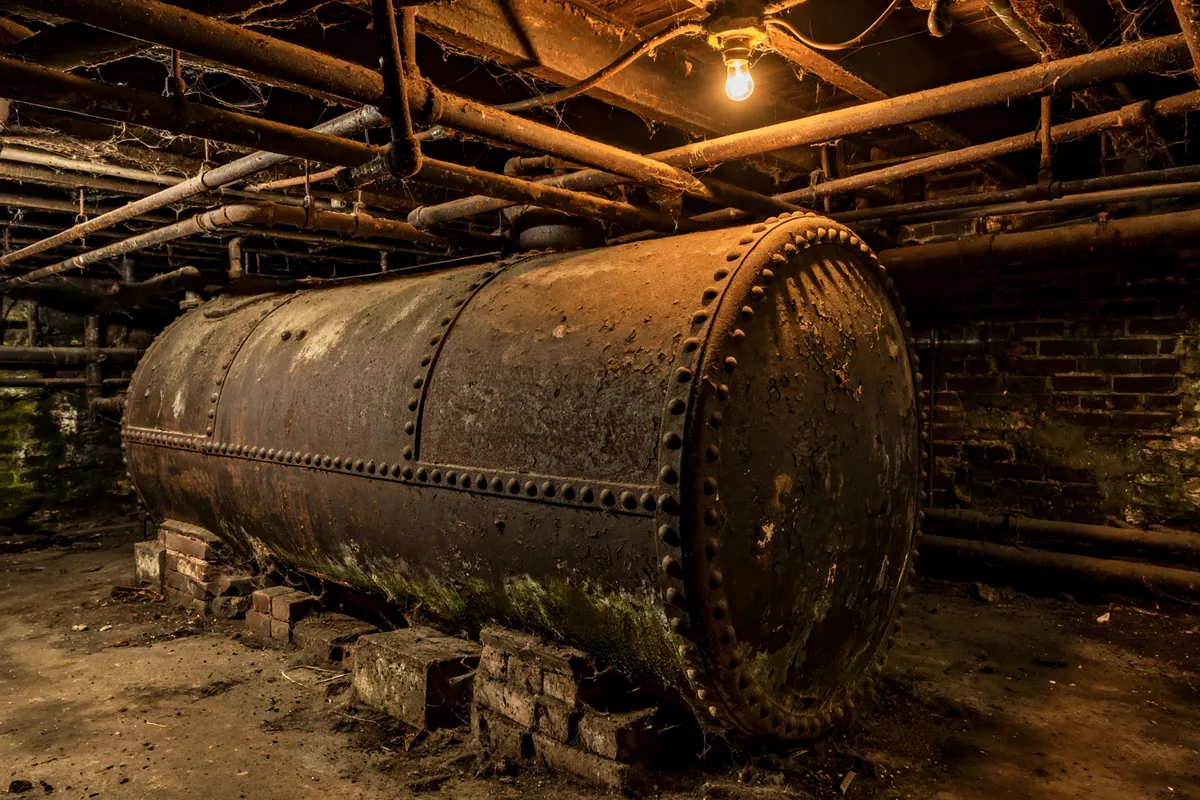
Age alone isn't the verdict — a maintained cast-iron boiler often runs 20+ years — but certain signs mean replacement is on the table. A cracked boiler section or heat exchanger is the big one; sections can sometimes be replaced, but on an older unit it's usually the beginning of the end. Chronic leaks that keep coming back, a heat exchanger that's been kettling for years, and controls so obsolete that parts are unavailable all point the same direction.
Then there's the money test: if you're paying for significant repairs every heating season, add up two or three years of those bills. A new boiler starts looking like the cheaper option fast. Rising fuel consumption is another signal — a boiler losing efficiency burns more oil or gas for the same heat.
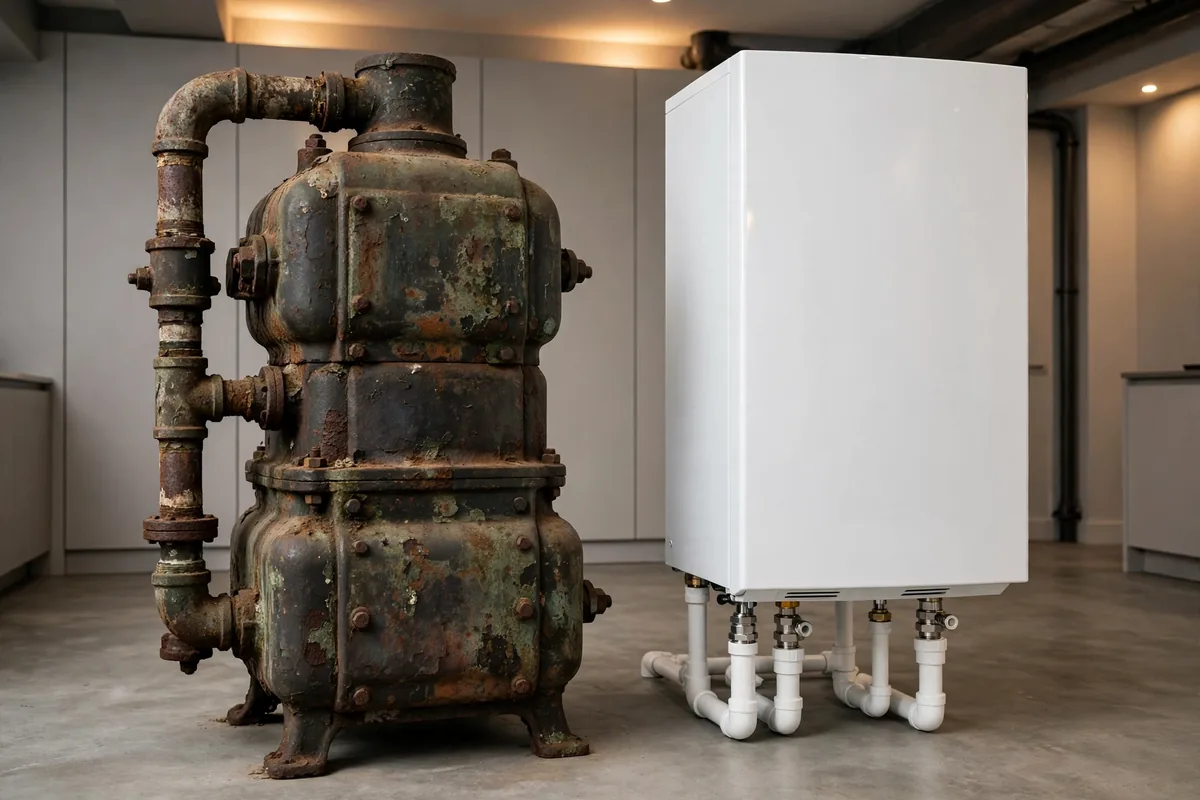
Finally, consider the age-efficiency gap. A 40-year-old boiler was built in a different era. Even a standard modern cast-iron unit runs around 80–84% AFUE, and condensing models reach 90%+ — meaningful fuel savings over a failing antique, winter after winter.
Wondering if it's time? Call (860) 650-9760 for an honest assessment.
Sizing: The Most Important Decision
The single biggest mistake in boiler installation is wrong sizing — and oversizing is the classic error. An oversized boiler short-cycles: firing hard, shutting down, and repeating all day. That wastes fuel, wears components, and heats unevenly.
Proper sizing starts with a heat-loss calculation for your house — square footage, insulation, windows, and air leakage all factor in. We size to what your home actually loses on the coldest night, not to the size of the boiler that's already sitting there.
Undersizing is just as bad: a boiler that can't keep up on a 10-degree night leaves you cold when it matters most. The target is right-sized, with a small margin for the coldest snaps.
Oil vs. Gas: The Northwest Connecticut Question
Here's the local reality: fuel oil heats about 38% of Connecticut homes statewide, and in northwest Connecticut the share runs higher — many Torrington streets have no gas main at all. If there's no gas line on your street, the choice is made for you: oil it is, and modern oil burners are far cleaner and more efficient than the units from the 1970s.
If you do have gas available, the comparison is real: gas means no tank and no deliveries, but conversion means running a gas line. Oil means a tank to maintain, but modern oil equipment is reliable and efficient, and you buy fuel on your terms.
We'll lay out both options honestly for your specific street and house. There's no one-size answer — there's the right answer for your situation.
Oil or gas? We'll help you decide: (860) 650-9760
What Installation Day Involves
A boiler replacement typically means: draining and removing the old unit, setting the new boiler, piping it to your existing distribution (radiators, baseboard, or radiant — that part usually stays), connecting fuel and venting, wiring controls, filling and purging air, firing it up, and tuning combustion.
One thing homeowners should know: boiler replacement usually requires a permit and inspection in Torrington. That's normal and good — it means the installation gets verified against code. We'll explain exactly what's required for your job before work begins.
Connecticut regulates heating work through contractor license categories (S-1, S-2, S-3, and limited B-1 classifications covering heating, piping, and cooling work). Permits and inspections exist to make sure the work meets code — ask any contractor about how they handle them.
Cast Iron vs. High-Efficiency
You'll choose between two broad families. Standard cast-iron boilers (around 80–84% AFUE) are the workhorses: simple, durable, tolerant of imperfect water chemistry, and familiar to every hydronic tech. They cost less up front and last decades.
Condensing high-efficiency boilers (90%+ AFUE) squeeze more heat from every unit of fuel. They save meaningful fuel over time but cost more installed, need specific venting, produce acidic condensate that must be drained properly, and are fussier about water quality and maintenance.
The right pick depends on your fuel, your chimney situation, your budget, and how long you plan to stay. We'll walk through the tradeoffs with real numbers for your house — not a sales pitch for the most expensive unit.
Get a straight answer on your options: (860) 650-9760
Don't Forget the Distribution
The boiler is only half the system. Old radiators, baseboard, and piping usually outlive several boilers — but installation is the right moment to assess them. Leaking radiator valves, failing zone valves, and a waterlogged expansion tank should all be addressed while the system is drained and open. Fixing them during installation costs far less than a return visit later.
Frequently Asked Questions
How long does a boiler installation take?
A straightforward replacement typically takes one to two days. Complications — fuel conversions, chimney work, or distribution repairs — can extend that. We'll give you a realistic timeline for your job before we start.
Can you replace my oil boiler with gas, or vice versa?
Yes, both directions are possible. Oil-to-gas requires a gas line to the house; gas-to-oil requires a tank installation. We'll price the full picture so you can compare honestly.
Will a new boiler work with my existing radiators?
Almost always, yes. Radiators and baseboard are just heat emitters — they don't care what heats the water. We'll check your distribution during installation and address worn valves or piping while the system is open.
What AFUE rating should I look for?
Standard cast-iron boilers run about 80–84% AFUE; condensing models reach 90%+. Higher efficiency saves fuel but costs more up front and needs more precise installation and maintenance. The payback depends on your fuel costs and how long you'll be in the home — we'll help you run the real comparison.
Do I need to replace my oil tank when I replace the boiler?
Not necessarily. If the tank is sound — no leaks, no heavy corrosion — it stays. If it's aging or weeping, replacement alongside the boiler is worth serious consideration.
What happens to my old boiler?
We remove it and handle disposal — old cast-iron boilers are heavy, but that's our problem, not yours.
A 20-Year Decision Deserves a Careful Installer
The cheapest boiler quote is rarely the best value. What matters is correct sizing, clean piping, proper combustion tuning, and an installer who'll still answer the phone next winter.
Start with a conversation: (860) 650-9760 215 E Main St, Torrington, CT 06790
No heat? Call Ember Heat.
Boiler repair, installation, and maintenance across Torrington, Connecticut — diagnosed properly, explained plainly, fixed right.