Oil Boiler vs Gas Boiler: Which Makes Sense in Northwest Connecticut?
Short answer: In much of northwest Connecticut — including many Torrington streets — the decision is made for you: there's no gas main, so oil is the practical choice. Where gas is available, gas offers no-tank convenience and typically lower fuel costs, while modern oil offers fuel-price flexibility and no dependence on utility infrastructure. Either fuel heats well when the equipment is properly installed and maintained.
Short answer: In much of northwest Connecticut — including many Torrington streets — the decision is made for you: there's no gas main, so oil is the practical choice. Where gas is available, gas offers no-tank convenience and typically lower fuel costs, while modern oil offers fuel-price flexibility and no dependence on utility infrastructure. Either fuel heats well when the equipment is properly installed and maintained.
Homeowners replacing a boiler eventually face the fuel question. Here's the honest breakdown for Litchfield County — not a sales pitch for either side, just the factors that actually matter.
Weighing the switch? Talk it through with Ember Heat: (860) 650-9760
The Local Reality: Infrastructure Decides First
Before comparing fuels, check what's actually available on your street. Natural gas reaches homes through underground utility mains, and large parts of Torrington and surrounding northwest Connecticut towns were never connected. Extending a main is the utility's decision, not yours — and for many streets, it never happened and likely won't.
Roughly 38% of Connecticut homes heat with fuel oil statewide, and the share runs higher in the northwest corner. If your street has no gas main, oil isn't the fallback — it's the fuel, and has been for generations. Many of our customers are in exactly this position, and they heat just fine.
If gas is available on your street, then you have a real choice. Here's how to think about it.
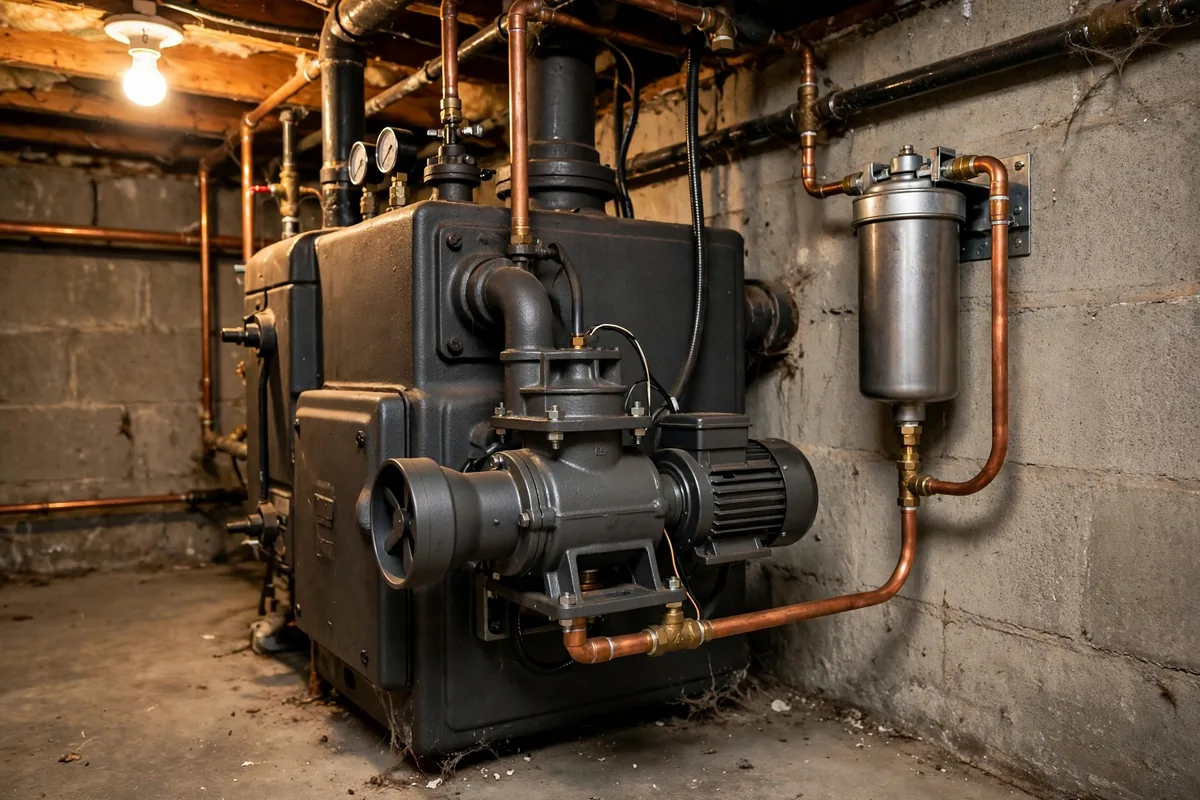
The Case for Oil
Fuel-price flexibility. You buy heating oil from the dealer you choose, when you choose. Prices fluctuate, but you can shop suppliers, buy in summer when prices are typically lower, and lock in pricing plans. You're a customer with options, not a ratepayer.
No utility dependence. Your heat doesn't depend on utility infrastructure beyond your property line. In an area prone to winter storms and outages, that independence has value — though note the burner still needs electricity, so a generator matters for true outage resilience either way.
Modern oil equipment is genuinely good. Forget the sooty burners of the 1970s. A modern oil burner — properly installed, serviced annually, and combustion-tuned — burns cleanly and efficiently. Standard cast-iron oil boilers run 80–84% AFUE; condensing oil units reach 90%+. The fuel didn't get worse; the equipment got better.
Established infrastructure. If you already have a tank, a fuel line, and a dealer relationship, staying with oil avoids conversion costs entirely. The devil you know, properly maintained, is a solid heating system.
The honest downsides: you manage a tank (monitoring levels, scheduling deliveries, eventual tank replacement), oil burners demand strict annual service (nozzle, filter, tuning — non-negotiable), and fuel prices are volatile. A neglected oil system deteriorates faster than a neglected gas system.
The Case for Gas
Convenience. No tank, no gauge-watching, no delivery scheduling, no running dry in a cold snap. Gas arrives through the pipe whenever you need it. For many homeowners, this alone settles it.
Typically lower fuel cost. Per BTU, natural gas has generally been cheaper than heating oil in recent years — though the gap varies, and it's not guaranteed forever. Over a 20-year boiler life, the fuel-cost difference is real money.
Simpler maintenance. Gas burners need annual service too — cleaning, combustion check, controls testing — but there's no nozzle to replace, no filter clogging with tank sludge, no soot management. Gas is more forgiving of a missed service year than oil (though we don't recommend missing years for either).
The honest downsides: conversion costs are substantial — gas line installation to the house, venting changes, and the boiler itself. You're tied to the utility's pricing with no ability to shop suppliers. And gas price volatility is real; the current advantage isn't a law of nature.
What About Propane?
Some northwest Connecticut streets have neither natural gas nor oil infrastructure history — they heat with propane from above-ground tanks. Propane boilers are solid equipment, but propane typically costs more per BTU than either oil or natural gas, so it's rarely the fuel anyone chooses when alternatives exist. If you're on propane and considering a switch at replacement time, we'll run the real numbers — but the infrastructure question (is gas available? is there an existing oil tank?) usually drives the answer.
The Conversion Question
Switching fuels at replacement time — oil to gas, usually — involves more than swapping the boiler:
- Gas line to the house. If the main is on your street but not to your house, the utility or a contractor runs the service line. Costs vary widely by distance and terrain.
- Venting changes. Different fuels, different venting requirements. Chimney condition matters — old chimneys often need liners for modern equipment.
- Tank decommissioning. Your oil tank doesn't just disappear. Above-ground tanks get removed; buried tanks need proper abandonment or removal, which has its own costs and (for old buried tanks) environmental considerations.
- The boiler itself. Whether you're switching fuels or not, you're buying a new boiler either way — the conversion premium is everything above the boiler.
Add it all up before deciding. Sometimes conversion pays for itself in fuel savings within a few years; sometimes the payback stretches past the boiler's life. We'll price the complete picture honestly — we're a boiler company, not a fuel company, so we have no stake in your choice.
Our Take
For most of our Torrington customers, the answer is straightforward: heat with the fuel your street supports, and invest in quality equipment installed correctly and maintained annually. A well-maintained oil boiler beats a neglected gas boiler every time — and vice versa. The fuel matters less than the installation quality and the maintenance discipline.
Where the choice is genuinely open, we lean toward honest math: total installed cost of each option, realistic fuel-cost projections, and your planned time in the home. We'll do that math with you, out loud, with real numbers for your house.
Get the honest fuel comparison for your home: (860) 650-9760 Ember Heat, 215 E Main St, Torrington, CT 06790 — boiler installation and service across Torrington, CT.
No heat? Call Ember Heat.
Boiler repair, installation, and maintenance across Torrington, Connecticut — diagnosed properly, explained plainly, fixed right.